
DEV74 Blog
From Hobbies to Robotics: How Technology Transforms Leisure Time
Discover how NVIDIA technologies, from the RTX 50 series to the Jetson platform, are redefining the boundaries between gaming, content creation, and advanced robotics.
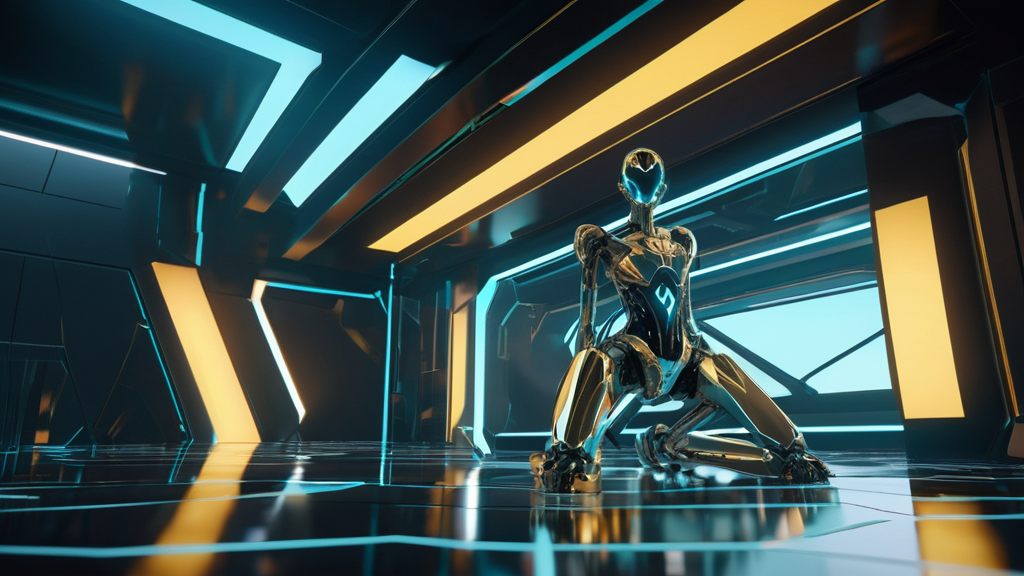
Technology as a Creative Catalyst During the Holidays
The holiday season often provides a window of time for reflection and recreation, but for technology enthusiasts, it serves as the perfect period to ignite new projects. The concept of 'leveling up' hobbies involves moving beyond passive consumption toward active technical exploration. It is no longer just about playing a game or watching a video; it is about understanding the underlying mechanics and finding ways to build, modify, or optimize those experiences.
In this landscape, we can identify three core pillars driving innovation for makers and hobbyists: high-performance gaming, AI-powered content creation, and autonomous robotics. Each of these domains offers unique opportunities to push the boundaries of modern hardware capabilities.
The Evolution of Gaming: From Consumption to Hardware Power
Gaming has undergone a profound metamorphosis in recent years. While the primary goal used to be simply running a title, today's challenge lies in achieving extreme visual fidelity and absolute fluidity. There is a clear distinction between desktop setups, engineered to maximize raw computing power and graphical detail, and gaming laptops that prioritize portability without making excessive compromises on performance.
Simultaneously, cloud gaming is democratizing access to demanding titles, allowing anyone with a stable internet connection to enjoy AAA experiences on existing devices. However, for those seeking maximum immersion and the lowest possible latency, dedicated hardware remains indispensable. The impact of NVIDIA hardware is palpable here: its ability to handle complex workloads ensures that online experiences are not only smooth but visually rich, allowing players to interact in increasingly sophisticated virtual worlds.
Tools for Creators: Accelerating Workflows with AI
For those involved in video editing, 3D modeling, or livestreaming, technology is a production tool rather than just entertainment. Many projects remain on the backburner due to the technical complexity of manual processes; this is where artificial intelligence steps in to streamline workflows.
The analysis of the GeForce RTX 50 Series and RTX Spark devices highlights how computing power is now being channeled toward simplifying repetitive tasks. NVIDIA Studio Drivers play a critical role in this ecosystem, providing superior stability for professional applications compared to standard drivers. Integrating AI acceleration allows creators to generate textures, perform color correction, or render complex scenes in a fraction of the time previously required, turning creative visions into tangible realities.
Robotics and Edge AI: Building Physical Intelligence
Beyond the screen, technology is taking physical form through robotics. The Jetson platform has established itself as the ideal entry point for makers looking to explore Edge AI. Unlike cloud computing, processing happens directly on the device, enabling real-time responses.
The fundamentals of computer vision are the first step: learning how a machine identifies objects and analyzes sensory data from its surroundings. Thanks to Jetson modules, it is possible to move rapidly from simple prototypes to functional deployments, where artificial intelligence guides physical movements and interactions with the real world.
Advanced Use Cases and Agentic Robotics
The line between intelligent software and mobile hardware is blurring with agentic robotics. A significant example is the Microduck project, which utilizes the Jetson Orin Nano Super module integrated with NVIDIA Cosmos. Here, we are not just talking about robots executing predefined commands, but systems capable of planning actions.
The agentic approach, exemplified by OpenClaw, allows the system to plan the necessary steps to achieve a goal and utilize external tools autonomously. Security and iterative learning are ensured by frameworks like OpenShell and ASPIRE skills. Furthermore, it is possible to build local robot companions using models like Nemotron 3.5 Bolt directly on Jetson Orin Nano hardware, ensuring both privacy and rapid response times.
Conclusion: Toward a Future of Physical and Digital Interaction
We are witnessing a fundamental transition: moving from simple perception models (understanding what is happening) to World Action Models, which can reason about how to act within the world. This evolution transforms technology from an observation tool into an action partner.
For those looking to dive deeper, resources like the Jetson AI Lab offer structured paths for continuous learning and project development. Technology is no longer a barrier between us and reality; it is the bridge that allows our imagination to manifest in both physical and digital forms.
Source: NVIDIA Blog


Choose a list
Which list should this product go into?
Comments (0)
No comments yet. Be the first to comment.