
Hardware and Software News
The Evolution of HPC: The Convergence of AI and Next-Generation Infrastructure
Explore how the synergy between 6th Gen AMD EPYC processors, Neptune liquid cooling, and integrated services is redefining the boundaries of AI and High-Performance Computing.
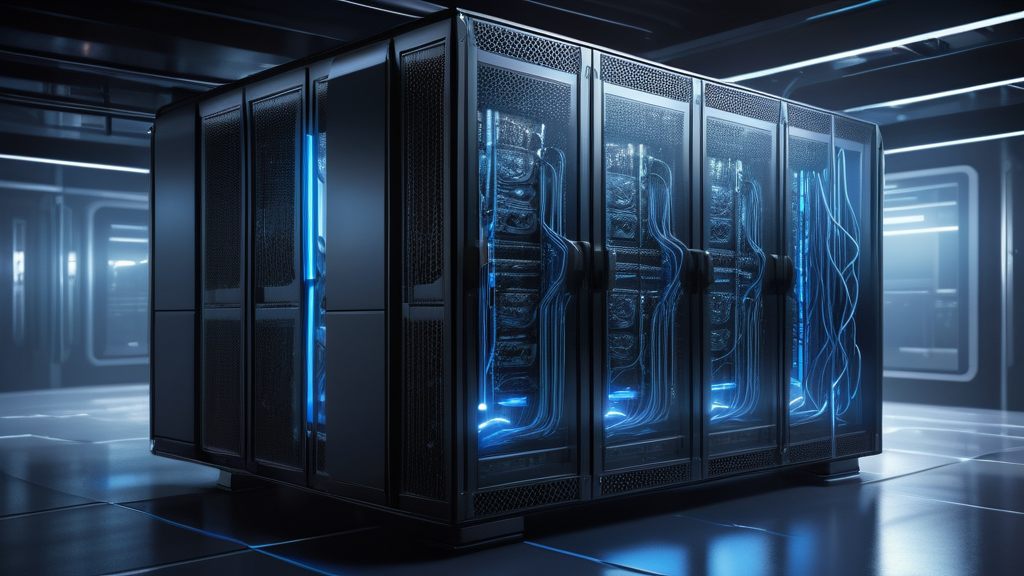
The New Era of AI and HPC Convergence
The technology sector is undergoing a fundamental transformation where Artificial Intelligence (AI) and High-Performance Computing (HPC) are no longer separate disciplines. Historically, HPC was the domain of heavy scientific simulations, while AI focused on training statistical models. Today, these two fields converge into a single operational ecosystem.
We are witnessing a critical shift: it is no longer just about training static models that are later deployed. The demand is moving toward continuous inference and agentic execution. AI agents must be capable of processing data in real-time, making autonomous decisions, and interacting with complex systems without interruption. This requires computing power that is not only high at peak but constant and scalable, capable of handling massive data flows with minimal latency.
The Lenovo Hardware Ecosystem and AMD EPYC Power
To support this evolution, hardware must surpass the limits of traditional architectures. The new Lenovo ThinkSystem servers represent a direct response to these challenges, powered by 6th Gen AMD EPYC 9006 SP7 processors. These components do not just offer an increase in core count; they provide a deep synergy between raw compute power and memory bandwidth.
The ability to move data quickly between memory and processing units has become the true bottleneck for modern AI. The AMD EPYC 9006 SP7 processors are designed to minimize these frictions, allowing HPC workloads to scale efficiently. Combined with the ThinkSystem platform, it ensures that every watt consumed translates into actual performance, reducing processing times for the most demanding simulations.
Overcoming Bottlenecks: Data Movement and Storage
One of the primary challenges in AI infrastructures is managing data movement. Often, CPU or GPU speed is undermined by slow storage systems or congested networks. To eliminate these obstacles, it is necessary to integrate high-performance storage arrays that can feed compute nodes with constant velocity.
Reducing latency means ensuring that the AI model can access the necessary data at the exact moment it needs it. In contexts such as genomic research or weather forecasting, a few milliseconds of delay can compromise the integrity of the results. An optimized infrastructure must therefore view storage not as a passive repository, but as an active and dynamic component of the computing flow.
Thermal Management and Sustainability: Neptune Technology
With the emergence of so-called AI factories on a gigawatt scale, heat becomes a structural problem. Traditional air cooling is no longer sufficient to manage the power density required by modern GPUs and CPUs. This is where Neptune liquid cooling technology comes into play.
Liquid cooling allows for transporting heat away from critical components with superior precision, enabling servers to operate at higher frequencies for extended periods. This not only improves performance but is fundamental for energy sustainability. Reducing the energy spent on air conditioning means lowering operational costs and reducing the carbon footprint of data centers, making technological innovation more responsible.
From Hardware to Operational AI: The Value of Lenovo Services
Owning the most powerful hardware does not automatically guarantee operational success. The transition from physical server deployment to operational AI capacity requires meticulous configuration and continuous optimization. Lenovo's services play a decisive role in this phase, offering expertise for data center security and performance maximization.
The primary goal is to accelerate time-to-market. Companies cannot afford months of testing and manual configurations. Through specialized services, Lenovo helps orchestrate the infrastructure so that it is ready for production workloads as quickly as possible, while ensuring that data security remains a priority during every phase of implementation.
Case Studies: The Real Impact of Technology
The effectiveness of these solutions is demonstrated by concrete applications across various sectors. For example, the University of Florida uses the HiPerGator supercomputer for advanced academic and industrial research, benefiting from computing power that enables scientific discoveries previously deemed impossible.
In the energy field, Imperial College London leverages HPC infrastructure for fusion energy research, where the precision of simulations is vital. Finally, in the creative sector, DreamWorks Animation uses high-performance rendering systems to create complex visual worlds. These examples demonstrate that, regardless of the industry, the convergence of AI and HPC is the engine transforming raw data into tangible innovation.
Strategic Implications for Enterprises
For modern organizations, choosing infrastructure is not merely a technical decision; it is a strategic move. An integrated architecture that combines computing power, advanced thermal management, and optimization services allows companies to transform massive volumes of data into scientific breakthroughs and competitive advantages.
Investing in a coherent ecosystem means preparing for the future of artificial intelligence. Those who manage to overcome infrastructure barriers today will be able to lead commercial and technological innovation tomorrow, turning data complexity into concrete growth opportunities.
Source: Storage Newsletter



Choose a list
Which list should this product go into?
Comments (0)
No comments yet. Be the first to comment.